Mar 2021 - Jun 2021
Redesigning Home Internet Purchasing for Viasat
A total overhaul of how rural customers buy satellite internet
Background
Technical products don't need technical explanations. By focusing on what users actually want to accomplish rather than how the technology works, we can make complex purchases feel simple.
In early 2021, Viasat asked our student team to reimagine their website, specifically focusing on how rural customers purchase home internet. I worked as both a researcher and designer on this 3-month project.
Breaking Down The Problem
First, we needed to understand what wasn't working. Since we couldn't access customer data directly (privacy policies), most of our time was spent conducting detailed research. We approached this two ways:
Detailed heuristic evaluation of the current site
Competitive analysis of other internet providers
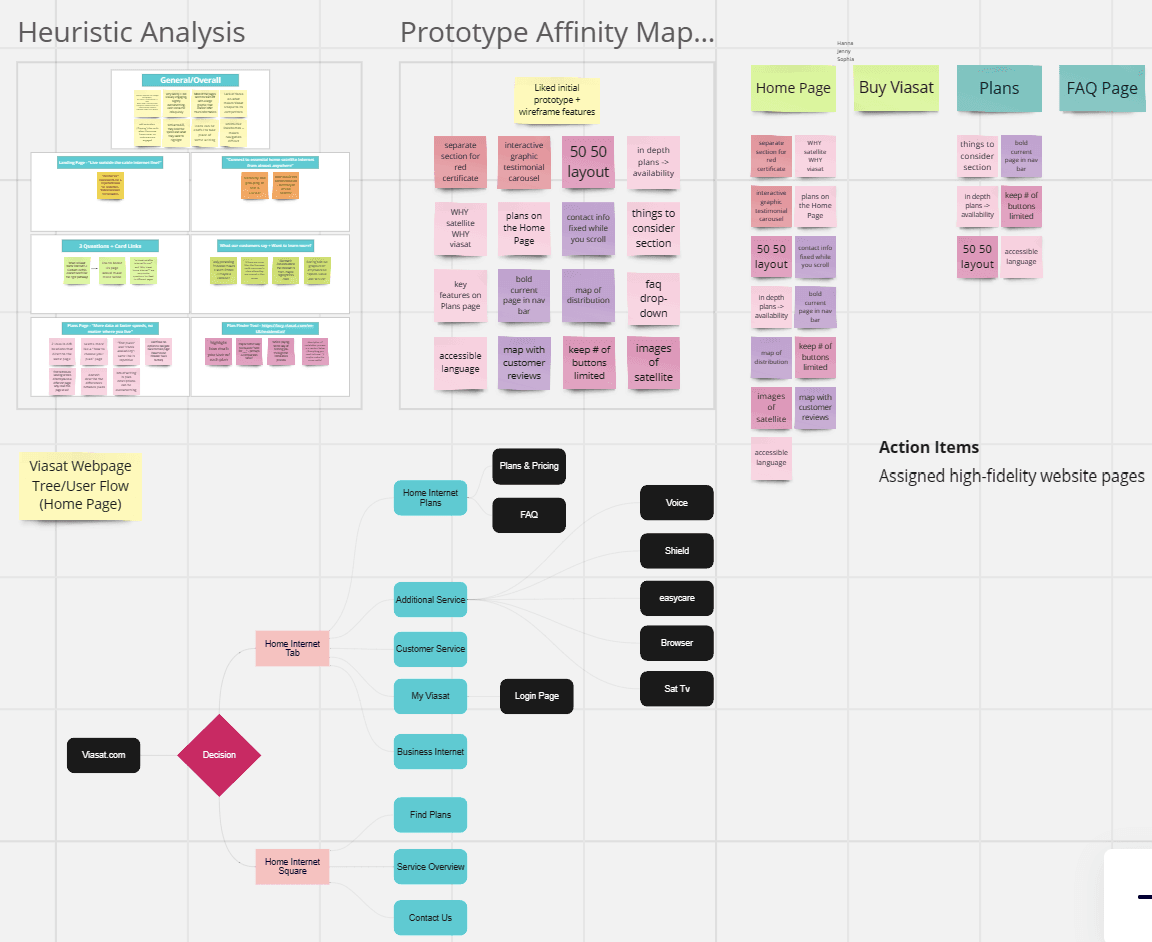
This research revealed two core issues:
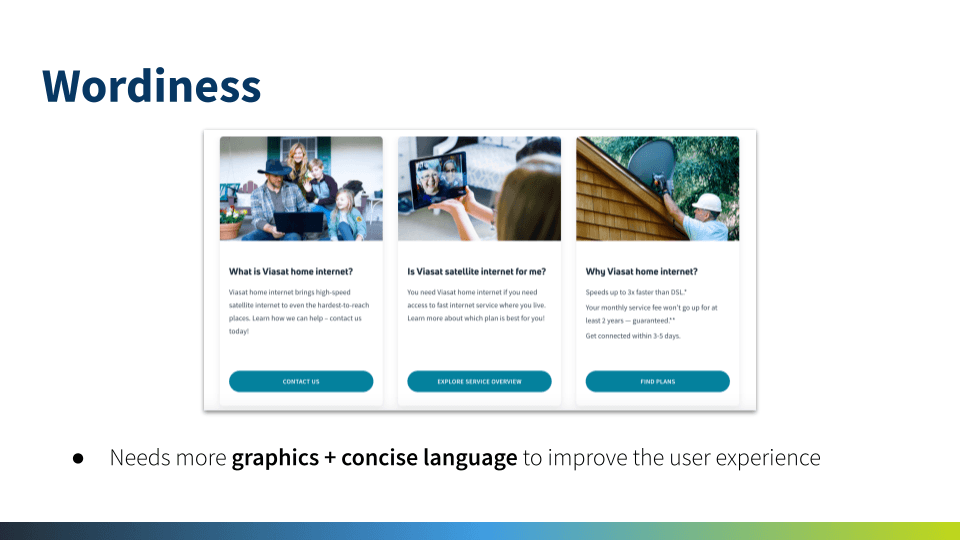
The site buried Viasat's actual advantages (like rural coverage) under generic corporate content. When you're selling internet to someone who has limited options, you need to lead with why you're their best choice. Instead, users had to wade through pages about corporate structure and satellite specs.
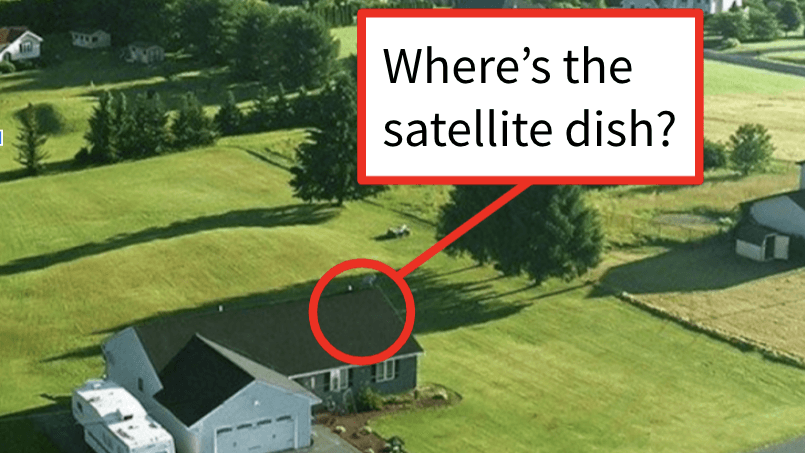
The purchase flow assumed users understood terms like "Mbps" and "rate limits." Our research showed many rural customers just wanted to know if they could stream Netflix or run their home business. The technical jargon was creating unnecessary friction.
Design Process
Once our research was done, we had about 1.5 weeks to brainstorm improvements and implement them in a final design. We chose to focus on 3 main changes:
1. Website Separation
Instead of one site trying to serve home, business and government customers, we created distinct flows for each. This let us tailor the language and features specifically for rural home users.
2. A Linear Purchase Flow
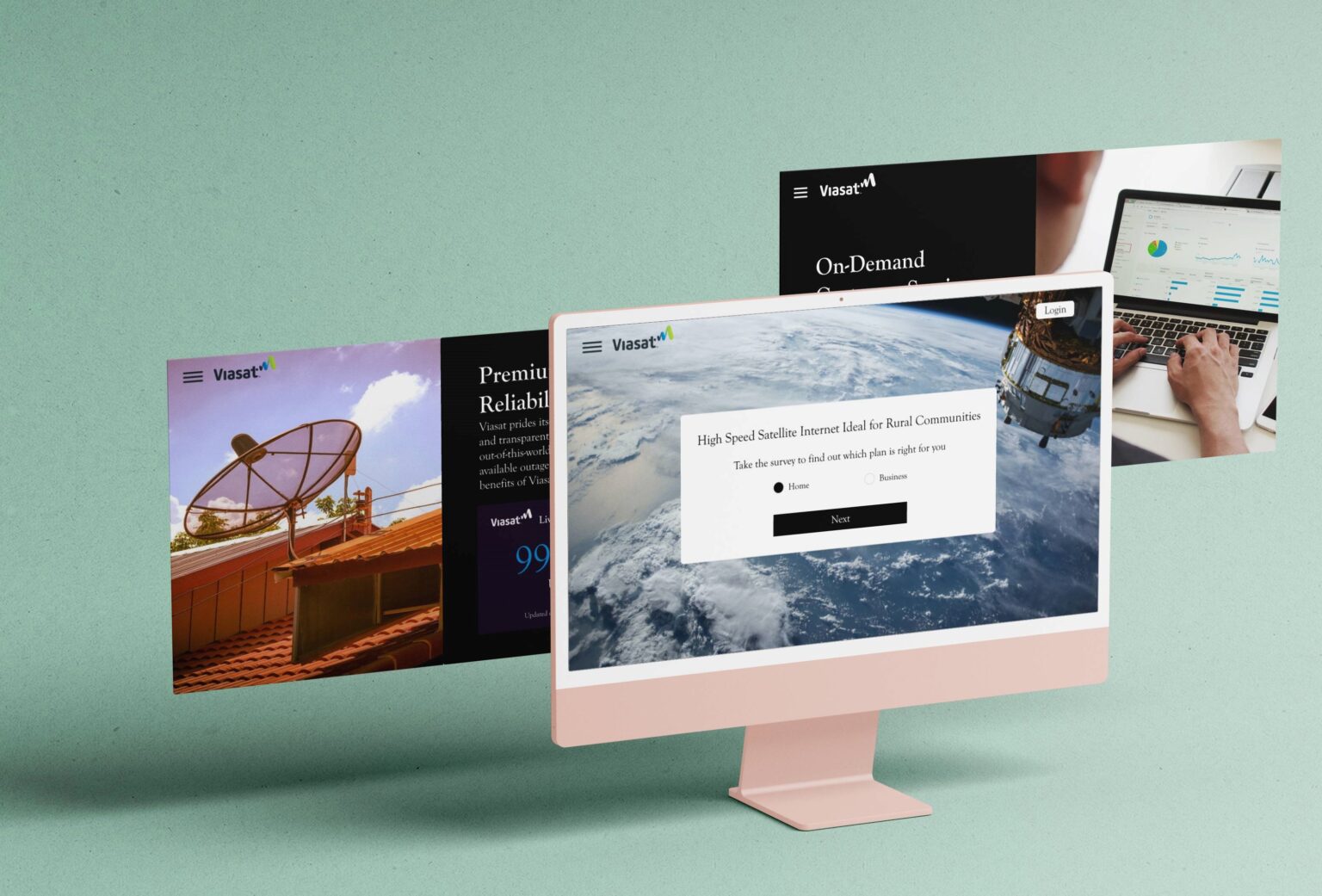
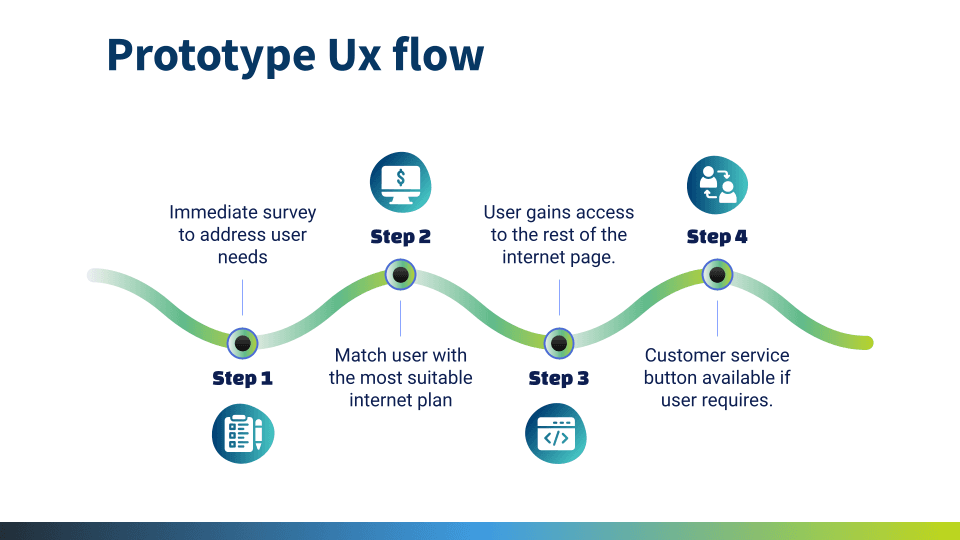
We replaced the complex navigation with a step-by-step flow, similar to what Stitchfix uses for clothing. Each step was designed to handle one decision:
Location check
Usage needs
Plan selection
Purchase completion
3. A Plain Language Survey
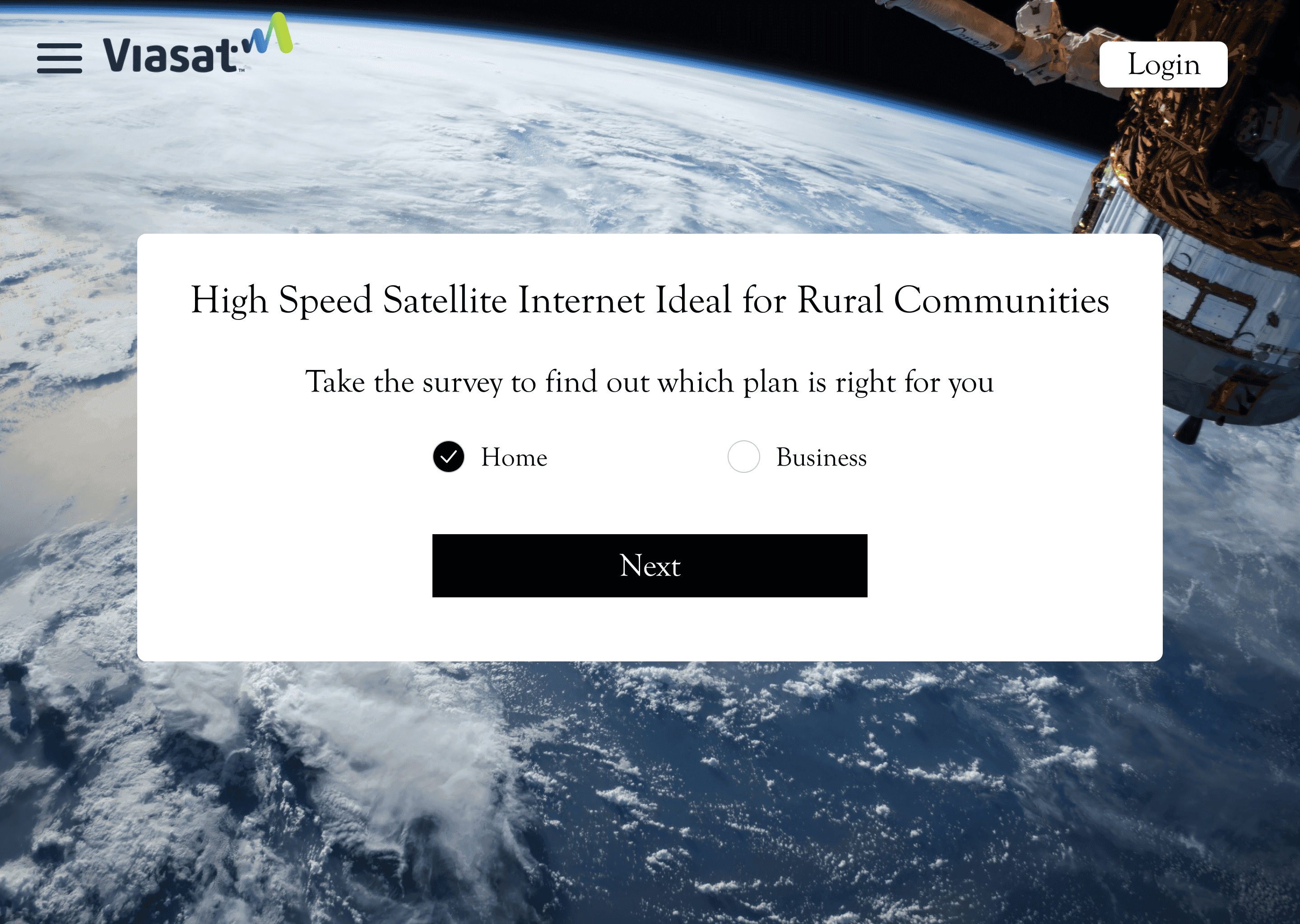
Rather than asking about bandwidth needs, we built a simple survey:
"Do you stream movies?"
"How many devices are usually online?"
"Do you work from home?"
This let us recommend plans without using technical terms.
Results
The final Zoom presentation went great. Viasat's UX leads were very enthusiastic about the research we did and called our design a "great dark horse prototype" because it challenged some fundamental assumptions about selling internet. Most providers lead with speed and price. We led with simplicity and human needs. They also commented that they would implement some of the usability fixes and rural marketing right away on the existing website.
Looking at their current site, several of our key changes made it to production:
Separate sections for different customer types
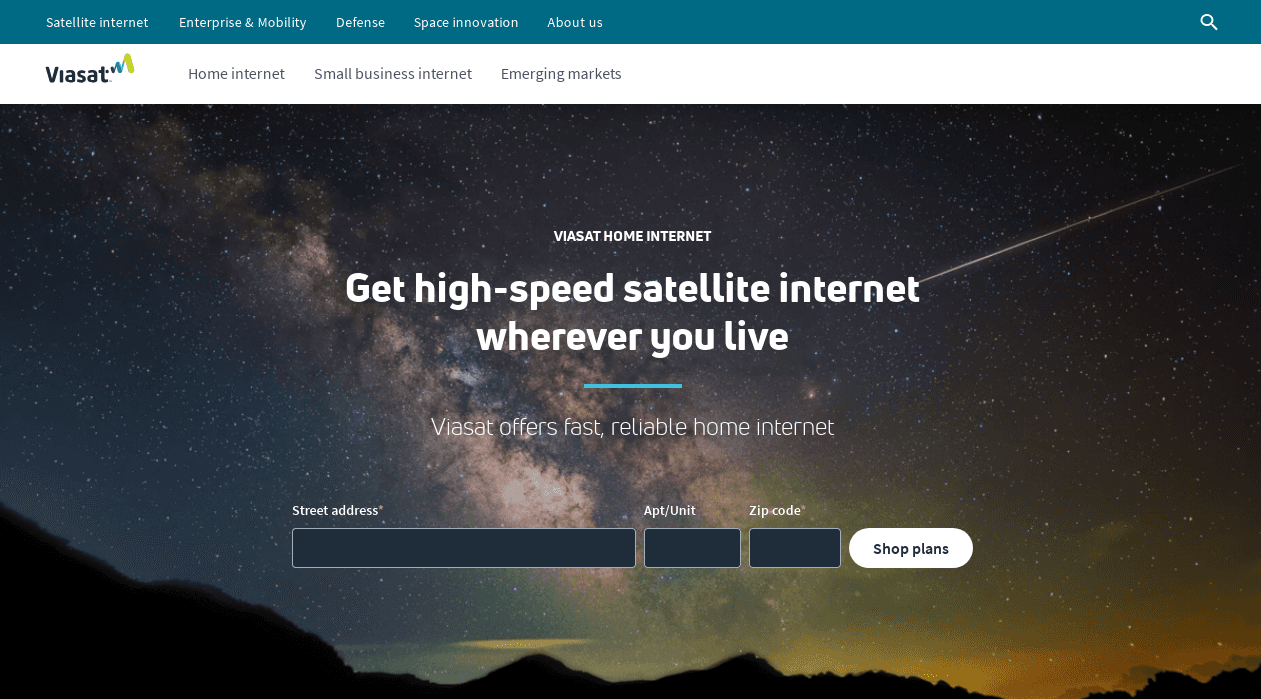
Simplified purchase flow starting with address entry
More emphasis on rural coverage advantages
Some elements (like our survey system) weren't used, which makes sense. Dark horse prototypes often generate ideas that influence the final product rather than becoming the final product directly by pushing boundaries in certain areas. The core insight, that technical products don't need technical explanations, likely shaped their eventual redesign.
Before

After